

MorTrack Platform: A Comprehensive Solution for Decedent Management

December 3, 2025

In today's fast-paced world, funeral homes and hospice care providers need advanced tools to help them manage their decedent transportation and logistics processes. MorTrack is a comprehensive platform designed specifically for this purpose, offering a wide range of features and benefits to simplify decedent management for these organizations. In this blog post, we'll take an in-depth look at MorTrack's platform and explore how it can help funeral homes and hospice care providers enhance their operations, improve communication, and provide better support to grieving families.

Section 1: The Key Features of MorTrack

  • Real-time tracking: MorTrack allows users to track decedent transportation in real-time, ensuring that all parties remain informed and up-to-date on the progress of each case.
  • Customizable dashboards: MorTrack's customizable dashboards enable funeral homes and hospice care providers to tailor the platform to their specific needs, providing a personalized solution.
  • Automated data entry: MorTrack's platform automates data entry, reducing the risk of errors and freeing up staff to focus on more important tasks.
  • Integration with existing CRM and Pre-Need platforms: MorTrack is designed to integrate seamlessly with existing CRM and Pre-Need systems, ensuring a smooth transition and minimal disruption to daily operations.
  • Enhanced communication between funeral homes, transport companies, and hospice facilities: MorTrack simplifies communication by providing a centralized platform where all parties can share updates and collaborate.

Section 2: Streamlining Decedent Management with MorTrack

  • Improved efficiency: By automating data entry and providing real-time tracking, MorTrack helps funeral homes and hospice care providers save time and streamline their operations.
  • Reduced errors: MorTrack's automated features and improved communication help to minimize errors and delays, ensuring a timely and accurate response to families' needs.
  • Increased transparency: MorTrack's platform enables funeral homes and hospice care providers to keep all parties informed about the progress of each case, fostering trust and confidence in their services.
  • Enhanced customer experience: By providing a smoother, more transparent process, MorTrack helps funeral homes and hospice care providers offer a better experience for grieving families.

Section 3: MorTrack's Role in Hospice Care

  • Optimizing workflow management: MorTrack's platform can help hospice care providers better manage their workflow, ensuring that resources are allocated efficiently and patients receive the care they need.
  • Enhancing communication with funeral homes: By providing a centralized platform for communication, MorTrack can help hospice care providers coordinate more effectively with funeral homes, ensuring a seamless transition for families.
  • Supporting end-of-life care: MorTrack's platform can help hospice care providers track decedents' personal effects and belongings, ensuring that these items are handled respectfully and securely during transportation.
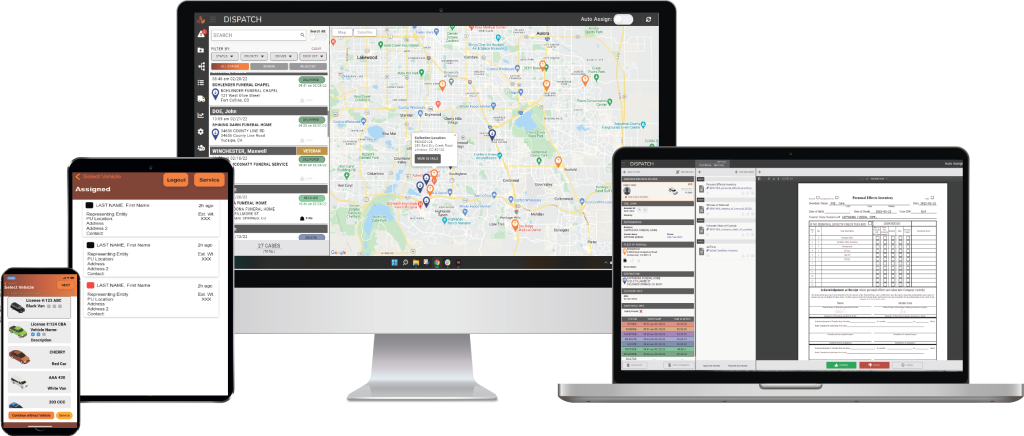
MorTrack's comprehensive platform is revolutionizing decedent management for funeral homes and hospice care providers. With its wide range of features and benefits, MorTrack simplifies and streamlines operations, improves communication, and ultimately enhances the experience for grieving families. By embracing this innovative solution, funeral homes and hospice care providers can stay ahead of the curve and provide a higher level of service to their clients, building trust and confidence in their services.

Discover how MorTrack's comprehensive platform can revolutionize your decedent management processes and enhance your operations. Learn more about MorTrack's powerful features and schedule a demo today to experience the difference for yourself.
December 10, 2025
For many funeral directors, chain of custody is a term more commonly heard in medical, legal, or law enforcement settings. But in reality, it’s a foundational part of funeral service — even if it’s not always referred to by name. Every identification, every transfer, every belonging entrusted to your care is part of a larger documented sequence. And today, families, regulators, and state laws are placing more focus than ever on making sure these steps are tracked and recorded. Whether your funeral home handles fifteen calls a month or fifty, a strong chain of custody protects your families, your staff, and your reputation. Let’s break it down more.
December 4, 2025
Decedent logistics plays a vital role in ensuring that funeral homes and hospice care facilities can effectively manage their workflow and provide the highest level of care for their patients. With the help of innovative solutions like MorTrack, decedent logistics has become more streamlined and efficient than ever before. In this blog post, we'll explore the importance of decedent logistics and discuss how MorTrack is helping to improve processes for funeral homes and hospice care providers alike.
December 4, 2025
Over the years tracking inventory for clients, I have seen many companies rise and fall. Some from external issues, some from change management failures, and some from holding on to their problems like they are a company asset. However, the largest example of where companies first show decline is from their inventory. Regardless of the industry, things go south when inventory management gets sloppy. Usually by the time sloppy inventory management practices show up on an accounting ledger, it is no longer a problem; it’s a crisis. We have worked for Fortune 100 companies who love their inefficiencies and know that, even though they manufacture a product, it's their IT team that drives their overall ability to be efficient. This didn’t become clear to them until COVID disrupted the supply chain last year (the microchip shortage around the globe is an accurate analogy). Imagine if they would have known even 30 days earlier that they were in for a raw material shortage. Now imagine 60-120 days in advance. Invoices and purchase orders can only go so far to tell an organization "how" inventory on hand is used. One company's blind reliance on the IT department to author reports based on financials alone has left them in a place where they are spending more than ever to have employees sit idle waiting for materials. These material shortages come from the supply chain disruptions that created a gap in raw material acquisitions. Based on financial data, the manufacturer said they had enough materials to bridge the supply gap. However, that turned out to not be the case. Why would this happen? It starts small at first. One senior manufacturing floor employee had a bad experience with a product they were proud of not passing the testing conducted by a third party QA process. This widget failed because of a design flaw, but even though the design was updated to fix the shortcoming, that employee felt personally responsible for ensuring that the product never failed a QA test again. As a senior associate, they ran the line and added just 3% more material than what was called for on new builds. Seems benign right? Wrong! By allowing employees to continually "alter" manufacturing specs without oversight, even if they believe they are providing value to the customer and ensuring the company looks good, these employees' changes can snowball into major issues. This small change was then altered without knowledge of design to all of the other products that were manufactured by that plant. Over time, that senior associate was involved in cross-training other plants. And, as we all learn from Good Manufacturing practices, it is good to share "best practices." However, that increase of 3% has spread to hundreds of products and plants. This is all without design, purchasing, and the C-level departments knowing the change ever happened. To bring this back full circle, if a product is being made that used to cost a dollar and now costs $1.03 by itself, it is not an alarm. However, this company makes 500+ million units on an annual basis. Another example is smaller but just as relevant. Say you have a VAR company that purchases products, adds some customizations to that product, then sells an experience (electrician, plumber, security company, AV installer, etc.). When a product is specified and that product is replaced in the field for any reason, are there more costs involved than just the delta of the new item's cost? Sure there are. It is the same issue as above. Even small changes gone unverified or explained foster a business environment of sloppy inventory management. These small changes all add up to take from the bottom line, first in ways that are hard to detect, then they start to build as time goes on and those habits become ingrained and are oh so hard to break. "I just didn’t want to have to go back to the truck for this specific part. So I used what I had within reach." - Said by everyone, at least once. One of the complaints we hear all of the time is "I don't want to micromanage my employees, they are a good group of people." In those instances, the real issue is usually a leadership or cultural issue. Besides, it's not micromanaging if you have a process that is well defined and ensures organization success. Asking employees to be accountable for their material usage is not micromanaging either; it's being smart with your resources regardless of the scale. Inventory management systems don't have to be evasive but they do need to think differently than your accounting platform. Your inventory under the eyes of "best practices" should be tracked to a point where acceptable loss is a known acceptable value. Moral of the story, if you have high dollar inventory or your revenue per item is high, then a single line on a P&L simply isn't going to explain "how" your business is running. The whole picture of how a business is functioning is simply not viewable from a P&L or a balance sheet. It requires another tool designed to offer incoming and outgoing inventory information from a non-financial point of view. Or in other words - trust but verify. From process improvement to change management. KPI's are important. Do you have KPI's or access to easy to access data that highlights your progress? If not, Cairnstack Software can help. Hello, Thanks for your time to read this post. I have a quick question for you. Did this post resonates with any company you have worked for or with? We would love to hear your story. If YES, send us an email at: Sales@cairnstack.com If I am way off base or have been naïve, please send us an email with your comments at: failedblog@cairnstack.com So we can understand what we are missing. One of our goals it to provide the best information possible. Sometimes that starts with a tough conversation but we can handle it. We sincerely appreciate your input and perspective.